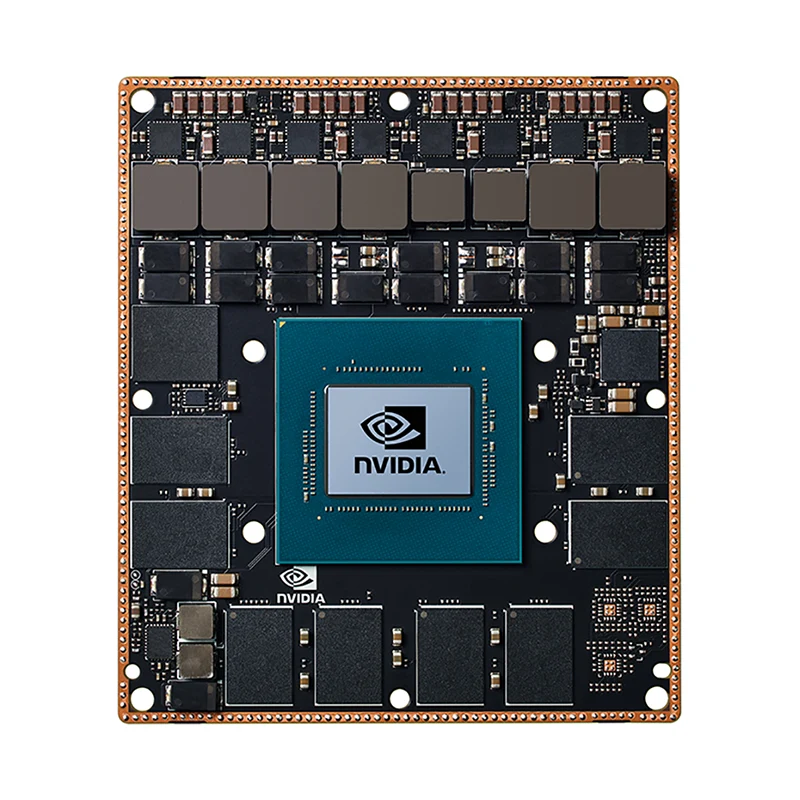
As edge AI continues to move from research labs into real-world applications, Telefly notes that questions surrounding the NVIDIA Jetson Nano lifecycle have become increasingly important for technology planners, developers, and industrial solution providers.
Recently, discussions about the End-of-Life (EOL) timeline for Jetson Nano production modules have attracted significant attention throughout the embedded computing ecosystem. Organizations relying on long-term hardware deployment cycles are seeking clarity about future availability, migration strategies, and technology roadmaps.
End-of-Life, commonly referred to as EOL, is a standard phase in the lifecycle of electronic products. It indicates that a product will eventually stop being manufactured or supported according to a defined schedule.
For embedded AI platforms, EOL announcements are particularly important because many industrial projects remain in service for years, sometimes even decades. Unlike consumer electronics, industrial devices often require consistent hardware availability to simplify maintenance, certification, and system upgrades.
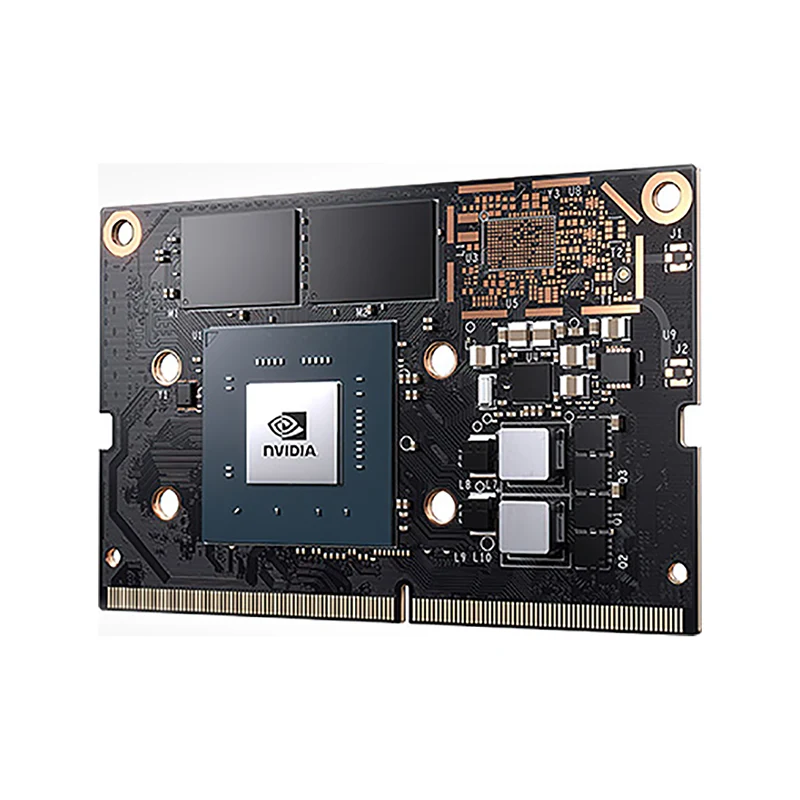
The module family has served as an entry point into edge AI development since its introduction. Thanks to its balance of computing performance and low power consumption, it quickly became popular in sectors ranging from education to industrial automation.
Understanding product lifecycle status helps organizations:
- Plan future hardware deployments
- Avoid unexpected redesign costs
- Maintain software compatibility
- Secure long-term component availability
- Prepare migration strategies in advance
- Reduce operational risks for ongoing projects
Rather than being viewed as a negative event, EOL announcements often serve as a signal for technology evolution and hardware modernization.
Over the past several years, AI has shifted closer to where data is generated. Instead of sending every image, video, or sensor reading to the cloud, organizations increasingly process information directly at the edge.
This trend has accelerated demand for compact AI computers capable of delivering real-time performance while operating within strict power and space limitations.
The Nvidia Jetson Nano became a popular option because it offered several advantages:
| Feature | Benefit |
| 128-Core Maxwell GPU | Accelerated AI inference |
| Quad-Core ARM Cortex-A57 CPU | Efficient multitasking |
| 4GB LPDDR4 Memory | Suitable for AI workloads |
| Low Power Design | Ideal for portable devices |
| Rich Connectivity | Easy integration with peripherals |
| JetPack SDK Support | Simplified development process |
These characteristics enabled developers to create solutions that were previously difficult or expensive to implement.
Many sectors have integrated Jetson Nano into their technology infrastructure.
Modern surveillance solutions increasingly rely on AI-powered analytics. Real-time object detection, facial recognition, and anomaly detection help improve security while reducing human monitoring requirements.
Robots deployed in warehouses, manufacturing facilities, and logistics centers often require local AI processing to navigate environments and perform autonomous tasks.
Traffic monitoring, environmental sensing, and public safety applications benefit from edge AI systems that can process data locally without relying entirely on cloud resources.
Universities, technical institutes, and innovation centers frequently use Jetson platforms to teach AI concepts and develop experimental projects.
Portable diagnostic tools and intelligent monitoring systems often require compact computing platforms capable of running AI models while consuming minimal power.
When a technology platform reaches EOL status, it does not immediately become unusable.
In most cases, organizations continue operating existing systems for many years. The key difference is that future planning becomes increasingly important.
Several common scenarios occur after EOL notifications:
- Continued Support Periods: Software updates, documentation, and technical resources often remain available during a transition period.
- Inventory Planning: Organizations evaluate future deployment needs and determine whether additional hardware should be secured for ongoing projects.
- Platform Migration: Engineering teams begin assessing next-generation alternatives that offer improved performance and longer lifecycle support.
- Software Portability Reviews: Developers verify whether applications can be migrated efficiently to newer hardware platforms.
These proactive measures help reduce operational disruption while maintaining project continuity.
The edge AI market has evolved rapidly since Jetson Nano first entered the industry.
Today's applications demand:
- Higher-resolution video processing
- More sophisticated AI models
- Faster inference speeds
- Greater energy efficiency
- Enhanced security features
- Expanded connectivity options
As a result, many organizations are evaluating newer AI computing platforms capable of handling increasingly complex workloads.
However, Jetson Nano continues to hold relevance because many deployed applications do not require extreme processing power. For lightweight AI tasks, it remains a practical and cost-effective platform.
One of the biggest challenges in embedded system design is balancing three critical factors:
- Performance
- Cost
- Product Lifecycle
Selecting the highest-performing hardware is not always the best decision. In many cases, system designers prioritize stability, predictable deployment costs, and long-term availability.
This is one reason why platforms like the Nvidia Jetson Nano have maintained strong adoption across multiple industries. Their combination of affordability and capability allows organizations to deploy AI applications without excessive infrastructure investment.
Before selecting an AI computing platform, decision-makers should consider:
| Key Question | Importance |
| How long will the project operate? | Lifecycle planning |
| What AI workload is required? | Performance sizing |
| Is future scalability necessary? | Growth planning |
| What power constraints exist? | Energy efficiency |
| Are environmental conditions challenging? | Reliability assessment |
| How important is ecosystem support? | Development efficiency |
Answering these questions helps align technology choices with long-term operational goals.
Industry analysts consistently identify edge AI as one of the fastest-growing segments of the technology market.
Several factors contribute to this growth:
- Faster Decision Making: Local processing eliminates cloud latency, enabling real-time responses.
- Improved Privacy: Sensitive information can remain on-site instead of being transmitted to remote servers.
- Reduced Bandwidth Costs: Only relevant data needs to be transmitted, lowering network expenses.
- Enhanced Reliability: Systems can continue functioning even when internet connectivity is unavailable.
These advantages explain why AI-enabled edge devices are becoming increasingly common across commercial and industrial environments.
While discussions surrounding Jetson Nano production module EOL dates continue to generate industry interest, the broader story is the ongoing evolution of edge AI technology.
Hardware platforms inevitably progress through lifecycle stages as newer architectures emerge and application requirements grow. Organizations that monitor product lifecycle information early can make informed decisions, reduce risks, and build more sustainable technology roadmaps.
For many existing deployments, Jetson Nano remains a valuable platform capable of supporting real-world AI workloads. At the same time, the industry's focus on next-generation edge computing highlights the importance of long-term planning, software flexibility, and scalable system design.
As edge AI adoption accelerates worldwide, understanding lifecycle management becomes just as important as selecting the right hardware. Telefly Telecommunications Equipment Co., Ltd. continues to follow developments in embedded computing and AI infrastructure, helping industry professionals stay informed about technology trends surrounding the NVIDIA Jetson Nano and the broader edge computing ecosystem.